
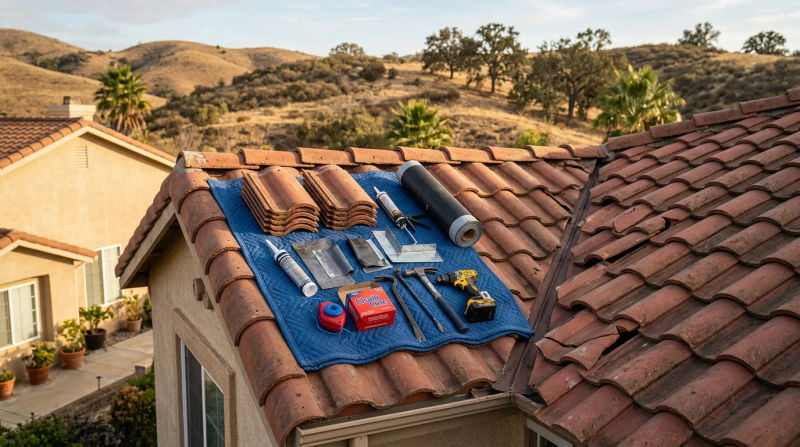
As a Senior Roofing Specialist with over 14 years of experience in Southern California, I know that for most homeowners, the first question about any roof issue is, "How much is this going to cost?" It's a valid and critical concern. When you see a cracked tile or, worse, a watermark on your ceiling, your mind immediately goes to the budget. My goal here is to provide a transparent, no-nonsense guide to understanding tile roof repair costs in Santa Clarita, so you can make informed decisions without the sales pressure.
With October upon us, the timing couldn't be more critical. The long, hot Santa Clarita summer, with its significant temperature swings from day to night, puts a unique strain on tile roofs. This thermal expansion and contraction can cause tiles to shift, crack, or slip. More importantly, it accelerates the aging of the underlayment - the actual waterproofing barrier beneath the tiles. Addressing these issues now, before the first winter rains arrive, is the key to preventing a small problem from becoming a costly emergency leak.
Average Costs in Santa Clarita
Let's get straight to the numbers. The tile roof repair cost Santa Clarita homeowners can expect varies widely based on the problem's complexity. Here’s a realistic breakdown based on what our crews see every day. Keep in mind these are estimates; a thorough inspection is the only way to get a precise quote.
- Minor Repairs: A Few Broken or Slipped Tiles
- Estimated Cost: $350 - $750
- This typically covers the labor and materials to replace a handful of cracked or missing tiles. The broken roof tile replacement price is influenced by how difficult it is to source a matching tile (color, profile, and manufacturer) and the accessibility of the repair area. This is a preventative fix, as exposed underlayment will degrade rapidly in the sun, leading to leaks.
- Moderate Repairs: Spot Underlayment and Flashing Work
- Estimated Cost: $900 - $2,800
- This is the most common type of leak-related repair we perform. It involves more than just replacing a tile. Our technicians will carefully remove a section of tiles, cut out the damaged and brittle underlayment, and install a new, high-quality waterproofing layer. We then re-install the original tiles. The tile underlayment spot repair cost depends on the size of the area (e.g., 10x10 feet) and its location, such as around a pipe, vent, or chimney where flashing is critical.
- Significant Repairs: Valley, Ridge, or Large Section Restoration
- Estimated Cost: $3,000 - $8,000+
- When a leak is traced to a roof valley (where two roof planes meet) or if a large section of underlayment has failed, the repair becomes more extensive. This is a labor-intensive job that requires removing hundreds of tiles, rebuilding a large section of the waterproofing system, and potentially replacing deteriorated wood sheathing underneath. While it's a significant investment, it is far less than the cost of a full re-roof and solves the problem for the long term.
Factors That Affect Price
Two homes with what looks like the "same" leak can have very different repair costs. Here’s what drives the price up or down for a Santa Clarita tile repair.
- The True Scope of Damage: A single cracked tile is one thing; a field of sun-rotted underlayment beneath it is another. The extent of the underlayment failure is the single biggest factor. What seems like a small leak can often be the result of a much larger compromised area.
- Roof Pitch and Accessibility: A low-slope, single-story roof is much faster and safer to work on than a steep, two-story roof. Higher pitches require more extensive safety equipment and slower, more methodical work, which increases labor costs.
- Tile Type and Availability: Concrete tiles are common and generally easy to source. Clay tiles, custom-glazed tiles, or discontinued profiles can be much harder and more expensive to match. Sometimes, a "bone yard" of salvaged tiles is the only source, and finding a perfect match takes time.
- Underlying Deck Damage: If a leak has been active for a while, it may have rotted the plywood or OSB roof deck. Replacing sections of this structural sheathing is an additional cost that can't be skipped. Our process always includes inspecting the deck once the old underlayment is removed.
- Layering and Previous Repairs: Occasionally, we uncover old, improper repairs that have to be removed and corrected. This adds labor and disposal costs but is essential for a durable, long-term solution.
How to Get the Best Value
Managing your roofing budget is about being strategic, not just choosing the lowest price. Here are my top tips for getting the best value for your investment.
- Be Proactive, Not Reactive: The best way to save money is to perform a roof tune-up or inspection before it rains. Addressing a few slipped tiles or sealing a cracked pipe flashing in the dry season is exponentially cheaper than dealing with an active leak and the interior damage that follows.
- Understand Your Repair Options: A good contractor will explain your choices. For an aging roof, a small tile underlayment spot repair cost might fix the immediate leak, but if the surrounding paper is also brittle, a larger section repair may be a better long-term value. At James Macdonald's roofer Co, we make it a point to show you photos and explain the pros and cons of a spot patch versus a more comprehensive section repair, allowing you to align the solution with your budget and long-term plans for the home.
- Don’t Defer Maintenance: Pushing a known repair off for another season is a gamble against the weather. In my experience, it rarely pays off. Small issues compound over time, and the eventual repair is almost always more extensive and expensive.
- Compare Apples to Apples: When getting quotes, make sure each contractor details the size of the repair area (in square feet), the type of underlayment they will use, and the warranty they provide. A cheaper quote might involve inferior materials or a smaller patch that won't last.
Questions to Ask Your Contractor
To protect yourself and ensure you're hiring a true professional, you should always ask these questions:
- Are you licensed with the CSLB and do you carry both General Liability and Workers' Compensation insurance? This is non-negotiable.
- Will you provide an itemized quote detailing the scope of work and materials used?
- What specific type of underlayment will you be using for the repair? (Look for synthetic underlayments or high-quality ASTM-rated felt paper).
- How will you ensure the replacement tiles match my existing roof?
- What is your warranty on both the labor and materials for this repair?
- What steps will your crew take to protect my landscaping and property during the work?
- Who is the on-site project manager I can contact with questions?
Answering these questions confidently is the mark of an organized, reliable roofing company.
Ultimately, a tile roof is a durable, long-lasting system, but it's not invincible - especially under the intense Santa Clarita sun. Understanding the potential costs and being proactive about maintenance are the best ways to protect your investment and ensure your home is ready for the upcoming rainy season. A well-executed repair by a trained crew not only stops a leak but also restores the integrity of your roof for years to come.
For a personalized estimate and a thorough roof inspection in Santa Clarita, contact James Macdonald's roofer Co for a free consultation.